







Transparency, Efficiency, and Integrity in Public Management
The adoption of leadership, strategy and control mechanisms aimed at evaluating, directing and monitoring public management strengthens the conduct of policies and the provision of services to society.
This process contributes to improving the institutional image, reducing the risk of fraud and irregularities, saving public resources and increasing public confidence.
These are some of the benefits of adopting a broad Governance and Compliance System.
Society, increasingly demanding, and national and international control bodies, reinforce the need for Governance & Compliance programs, based on specific legislation and good practices.
Irregularities and illegalities have severe consequences: they undermine the credibility of public administration, expose officials to legal proceedings, and erode public trust.
A lack of compliance jeopardizes not only the government’s image but also the continuity and public acceptance of policies.
Public officials face risks regarding integrity, legality, and sustainability, making them liable to various penalties and potential removal from office.
In this context, a Governance & Compliance System offers the administration an opportunity to serve the common good through effective, high-quality services, thereby enhancing the reputation of the municipal government.
Benefits of a governance and compliance program
Implementing a Governance and Compliance program generates direct and indirect benefits for both the municipal administration and the mayor. Key benefits include:
Compliance with legal requirements and external oversight mandates (Courts of Auditors and Public Prosecutor’s Offices), avoiding situations that could result in sanctions against the institution and the public official.
Qualifying and controlling public spending is crucial in the face of budgetary constraints. In this context, governance and compliance represent investments with high economic returns.
Protecting public officials against unfounded accusations entails providing technical and institutional support to defend the official’s integrity and reputation.
Strengthening of the institutional and political image, as the public perception that the administration acts ethically and with integrity fosters respect and credibility.
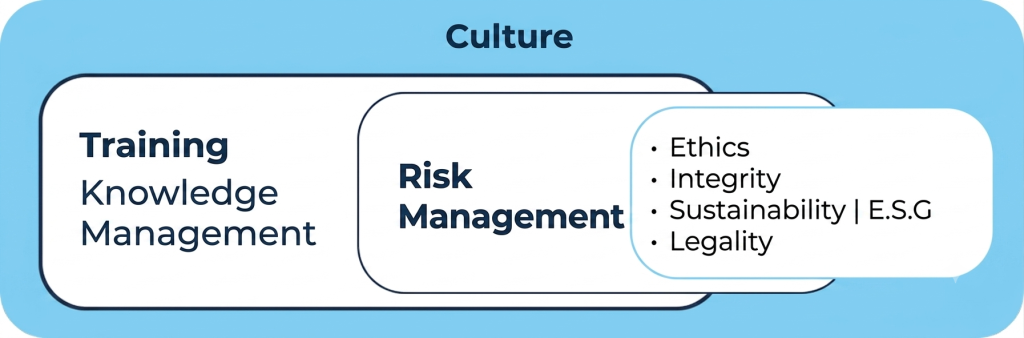
Fostering a culture of ethics within the organization, thereby adding value for public servants and society, while consolidating practices related to transparency, risk monitoring, and the mitigation of non-compliance.
These factors make it essential to develop governance, compliance, integrity, an ethical culture, and risk management, supported by tools such as a code of ethics, preventive and corrective controls, and the monitoring of action plans.
It is precisely these drivers that lead managers to decide to implement structured Governance & Compliance programs.
Governance consists of the integration of Leadership, Strategy, and Control, applied to evaluate, direct, and monitor the initiatives of the Mayor and their team.
Its objective is to strengthen the management structure, ensuring a commitment to results, transparency, social participation, and efficiency.
Compliance entails the adoption of internal actions, principles, and rules aimed at strict adherence to legislation and public administration standards.
This is achieved through the creation, implementation, and monitoring of administrative policies, procedures, and practices grounded in legality, efficiency, and transparency, thereby proactively mitigating integrity risks.
Consequently, the implementation of a Governance & Compliance system serves as a safeguard for both public officials and the public entity itself.
Such a system enables decision-making based on technical and ethical criteria, ensuring the pursuit of the common good and the public interest.
Benefits for the Institution
• Reduction of risks of irregularities
• Legal and administrative certainty
• Compliance with legislation and prevention of penalties
• Transparency and credibility with oversight bodies and the public
• Management efficiency and resource savings
• Technical and ethical training for public servants
• Strengthening of the institutional image, fostering greater internal and external credibility
Benefits for the Manager
• Reduction of legal risks
• Greater technical and legal backing for decisions
• Prevention of lawsuits and adverse judgments
• Strengthening of political image and increased prestige
• Easier access to resources and partnerships
• Evidence of due diligence and good faith
• Building a legacy of modern, ethical, and principled management
Compliance
Public managers must base their actions on legality, integrity, and ethics.
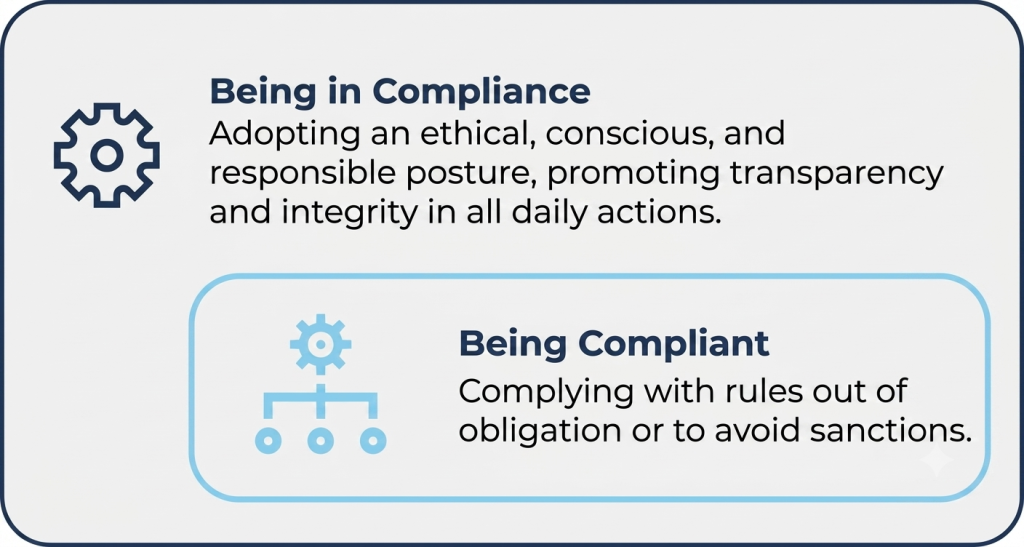
More than merely meeting standards, compliance entails an ongoing commitment to institutional and social values, ensuring alignment between what is expected of management and actual daily practice.
Compliance management is responsible for guiding and monitoring various types of corporate risks (operational, financial, IT, reputational, integrity, environmental, social, and governance) and for fostering a culture of ethics and conduct. This involves organizational processes and, above all, the people participating in them—including public servants, third-party collaborators, executives, and managers.
Compliance is comprehensive, extending beyond the mere observance of standards and rules.
Compliance is understood in a broad sense as the continuous pursuit of alignment between what is expected of an organization—respect for the rules, purpose, values, and principles that constitute its identity—and its actual day-to-day practices. This alignment serves to consolidate the organization’s identity and reinforce its culture, thereby providing greater stability for long-term planning, contributing to value creation, and helping to meet societal interests and achieve the common good.
A robust compliance program in the public sector must:
- Monitor risks (operational, financial, integrity, environmental, social, and reputational).
- Foster a culture of ethics and proper conduct among public servants, third-party contractors, and managers.
- Offer stability for long-term planning and generating value for society.
Compliance in the public sector
Mechanisms and instruments to ensure the organization’s activities are carried out in compliance with applicable legislation and within ethical and conduct standards
Fundamental premises:
- The tone comes from the top: leadership must set the example.
- Constancy of purpose: the program must be a state initiative, not merely a government one.
- Longevity: operates with the aim of ensuring the longevity of compliance, regardless of changes in power or the profile of a specific manager or official.
Proposal for Public Sector Governance & Compliance
Management Brand: values to be communicated
Management needs to affirm its commitment to ethics and transparency to society, backed by concrete actions. A slogan such as “Ethical and Efficient Management” reinforces this positioning.
Foundational pillars:
| It is necessary to establish a Governance and Compliance unit reporting directly to the head of the executive branch, forming a formal structure with clearly defined authority. The governance and compliance structure must focus on managing risks associated with macro-processes and the ethical environment of the municipal administration across all entities (Secretariats, Autonomous Agencies, and Foundations). The compliance structure’s areas of operation must be aligned—in an interdependent manner—with the structures for Planning, the Office of the Comptroller General, the Office of the Attorney General, and other operational secretariats. Compliance can only be effective if there is synergy among the units that make up the municipal government’s organizational structure. Compliance management operates through advisory guidance aimed at embedding risk management processes and an ethical environment within all municipal agencies; this differs from the Office of the Comptroller General, which focuses on verifying compliance through the General Audit, the Ombudsman’s Office, and the Internal Affairs Office. | ![]() |
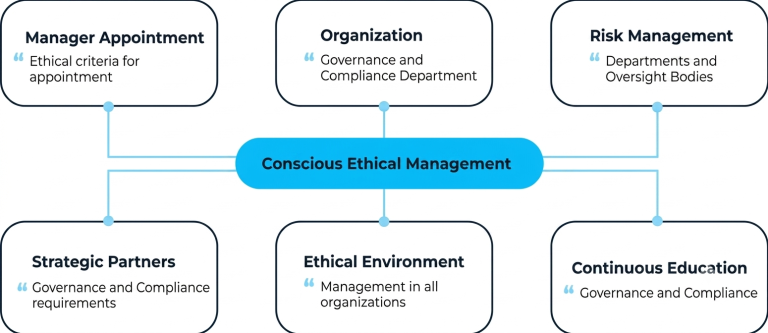
Conscientious municipal administration requires implementation based on the management of strategic and process-related risks.
Decisions made by senior management must be grounded in priority risks—covering areas such as integrity, operations, finance, reputation, ESG (environmental, social, and governance), technology, and innovation, among others.
Managers of key processes must master corporate risk management methodology and its practical application as a public management tool. The process must be led by the designated “risk owner.”
The Department of Governance and Compliance should provide methodological support to municipal departments, autonomous agencies, and other entities, enabling them to manage their own risks in accordance with appropriate, standardized, and best-practice guidelines.
Strategic and process-related risks must be monitored, as they serve as essential tools for the organization’s strategic planning and decision-making.
It is essential to allocate resources to fund initiatives aimed at developing compliance, particularly continuing education for managers and executives within the Secretariats and affiliated bodies.
Continuing education requires multi-year training planning for all civil servants and executives, focusing especially on governance, compliance, integrity, sustainability, and corporate risk management.
Continuing education on compliance and ethics must be mandatory for all managers and executives.
A focus on ethics and conduct is key to the success of public administration aiming to operate with governance and compliance.
Ethics must be embedded in the organization’s daily operations, permeating work processes and the delivery of services to the public, and becoming an integral part of the conduct of every civil servant, executive, and manager.
The effectiveness of ethics and conduct standards depends on how departments and other agencies integrate into a structured continuing education model, supported by a comprehensive communication system.
Governance and compliance within public organizations must extend to the administration’s strategic partners—such as suppliers, service providers, and construction contractors—ensuring that requirements regarding integrity and ethical management are comprehensive and absolute.
The Department of Governance and Compliance must act to foster risk management processes and an ethical environment, both within the municipal government itself and across the market of partner organizations.
Defining political and technical criteria for the profiles of managers selected to serve in the organization supports the decision-making of the government leader, ensuring greater confidence in the appointment of competent professionals of impeccable conduct.
Transparency in the process of selecting government officials is essential.
It is important to announce the profiles of appointed leaders and managers at public events, widely publicizing the selection criteria, adherence to prerequisites, and commitments to ethics.
The government begins with a focus on ETHICS!

It is necessary to establish a Governance and Compliance unit reporting directly to the head of the executive branch, forming a formal structure with clearly defined authority.
The governance and compliance structure must focus on managing risks associated with macro-processes and the ethical environment of the municipal administration across all entities (Secretariats, Autonomous Agencies, and Foundations).
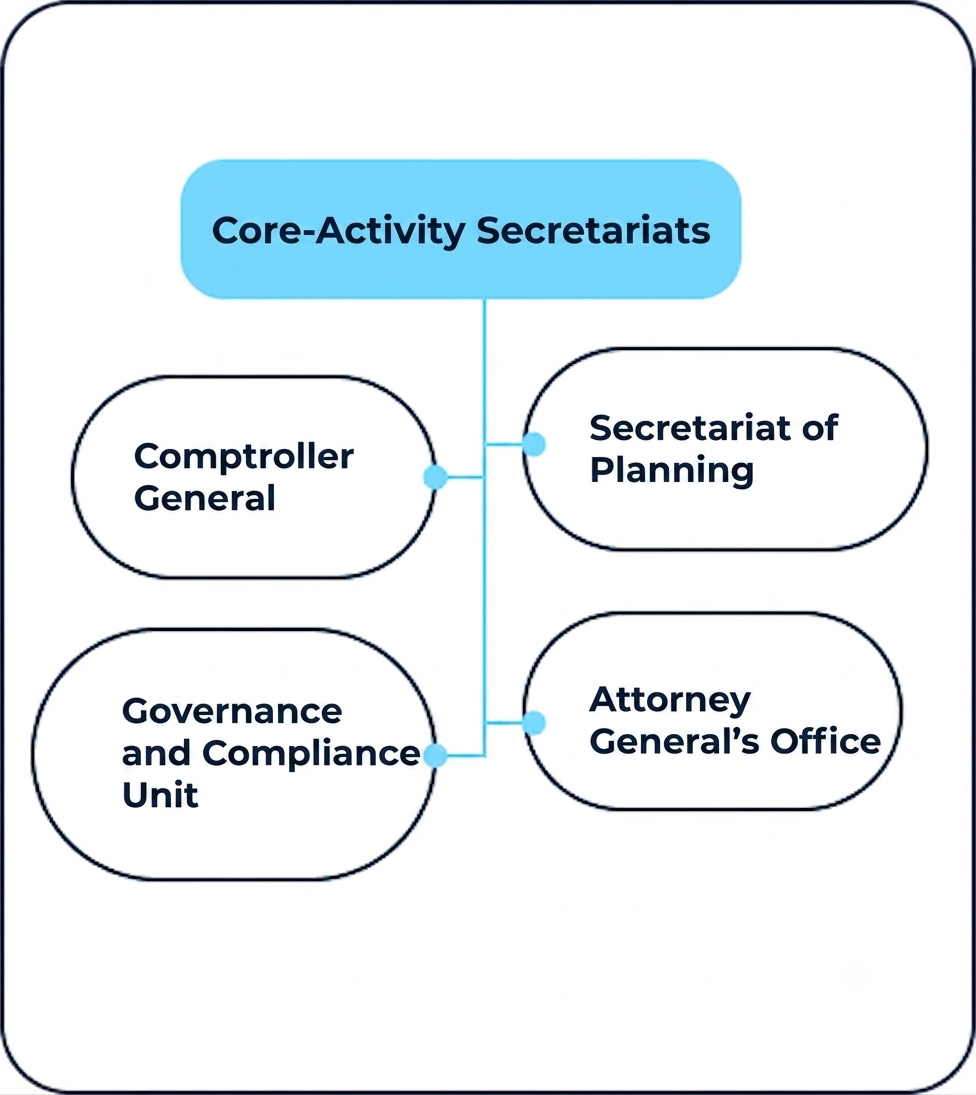
The compliance structure’s areas of operation must be aligned—in an interdependent manner—with the structures for Planning, the Office of the Comptroller General, the Office of the Attorney General, and other operational secretariats.
Compliance can only be effective if there is synergy among the units that make up the municipal government’s organizational structure.
Compliance management operates through advisory guidance aimed at embedding risk management processes and an ethical environment within all municipal agencies; this differs from the Office of the Comptroller General, which focuses on verifying compliance through the General Audit, the Ombudsman’s Office, and the Internal Affairs Office.
Conscientious municipal administration requires implementation based on the management of strategic and process-related risks.
Decisions made by senior management must be grounded in priority risks—covering areas such as integrity, operations, finance, reputation, ESG (Environmental, Social, and Governance), technology, and innovation, among others.
Managers of key processes must master corporate risk management methodology and its practical application as a public management tool. The process must be led by the designated “risk owner.”
The Department of Governance and Compliance should provide methodological support to municipal departments, autonomous agencies, and other entities, enabling them to manage their own risks in accordance with appropriate and standardized best practices.
Strategic and process-related risks must be monitored, as they serve as essential tools for the organization’s strategic planning and decision-making.
It is essential to allocate resources to fund initiatives aimed at developing compliance, particularly continuing education for managers and executives within the Secretariats and affiliated bodies.
Continuing education requires multi-year training planning for all civil servants and executives, focusing especially on governance, compliance, integrity, sustainability, and corporate risk management.
Continuing education on compliance and ethics must be mandatory for all managers and executives.
A focus on ethics and conduct is key to success for public administration aiming to operate with governance and compliance.
Ethics must be embedded in the organization’s daily operations, permeating work processes and the delivery of services to the public, and becoming an integral part of the conduct of every civil servant, executive, and manager.
The effectiveness of ethics and conduct standards depends on how departments and other agencies integrate into a structured continuing education model, supported by a comprehensive communication system.
Governance and compliance within public organizations must extend to the administration’s strategic partners—such as suppliers, service providers, and construction contractors—ensuring that requirements regarding integrity and ethical management are comprehensive and absolute.
The Secretariat of Governance and Compliance must act to foster risk management processes and an ethical environment, both within the municipal government itself and across the market of partner organizations.
Defining political and technical criteria for the profiles of managers selected to serve in the organization supports the decision-making of the government leader, ensuring greater confidence in the appointment of competent professionals of impeccable conduct.
Transparency in the process of selecting government officials is essential.
It is important to announce the profiles of appointed leaders and managers at public events, widely publicizing the selection criteria, the fulfillment of prerequisites, and the commitment to ethics.
The government begins with a focus on ETHICS!
Relevant Topics
Ethical environment
• Ethics Committee;
• Continuing education plan;
• Code of ethics and conduct;
• Effectiveness of the code of ethics and conduct;
• Ethics and reporting channel;
• Handling of reports;
• Incentive programs.
Corporate Risk Management (integrity and other relevant areas)
• ISO 31000 methodology;
• Dissemination of best practices (process mapping, risk identification, control assessment, residual risk treatment, monitoring and evaluation of action plans);
• Dashboard to support risk-based decision-making.
Integrity
• Digital processes and detailed analyses ensure compliance and continuous improvement.
• Document centralization and updating facilitate management and the implementation of improvements.
• Integrated solutions provide up-to-date access to and efficient management of applicable legislation.
Legality
• Mapping of ESG (Environmental, Social, and Governance) requirements (SDGs – Sustainable Development Goals);
• ESG risk assessment;
• Monitoring and evaluation of action plans.
Sustainability
• Mapping of ESG (Environmental, Social, and Governance) requirements (SDGs – Sustainable Development Goals);
• ESG risk assessment;
• Monitoring and evaluation of action plans.

